
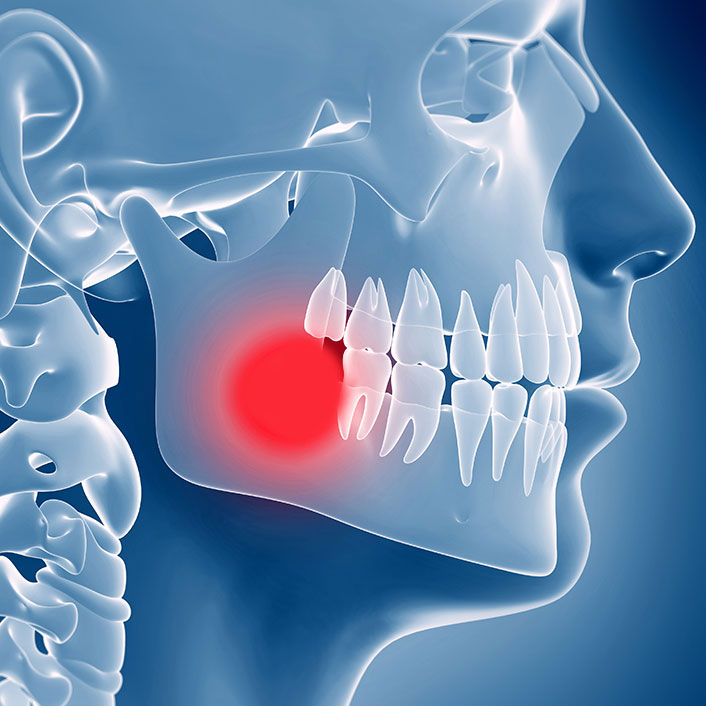
TMJ stands for temporomandibular joint and is used to describe dysfunction or disorders related to the joint. “Temporo,” refers to the temple area of the skull; “mandibular,” refers to the lower jaw; and “joint” is essentially where the head and jaw meet. Problems in this joint may be caused by a trauma, misalignment of the teeth, or excess muscle tension. The two bones that meet at the jaw are buffered by cartilage and five different muscles, so TMJ can cause a variety of troubles.
Common TMJ symptoms:
Dental treatments for the condition can include replacing missing teeth, moving teeth, adjusting the bite, filling gaps between teeth, and more. There is no one solution that is right for all cases. Sometimes a plastic mouthpiece is used to prevent clenching or grinding that is contributing to the problem. If TMJ is left untreated and reaches extremes, surgery may be required to repair the badly damaged joint.
TMJ refers to the temporomandibular joints that connect the lower jaw to the skull. Problems involving the joints, muscles or bite may contribute to jaw discomfort or dysfunction.
Symptoms can include jaw pain, tenderness, clicking or popping, difficulty opening or closing, headaches or discomfort when chewing. These symptoms can have multiple causes.
Evaluation can include a discussion of symptoms and history along with an examination of the jaw joints, muscles, teeth and bite to determine appropriate next steps.